
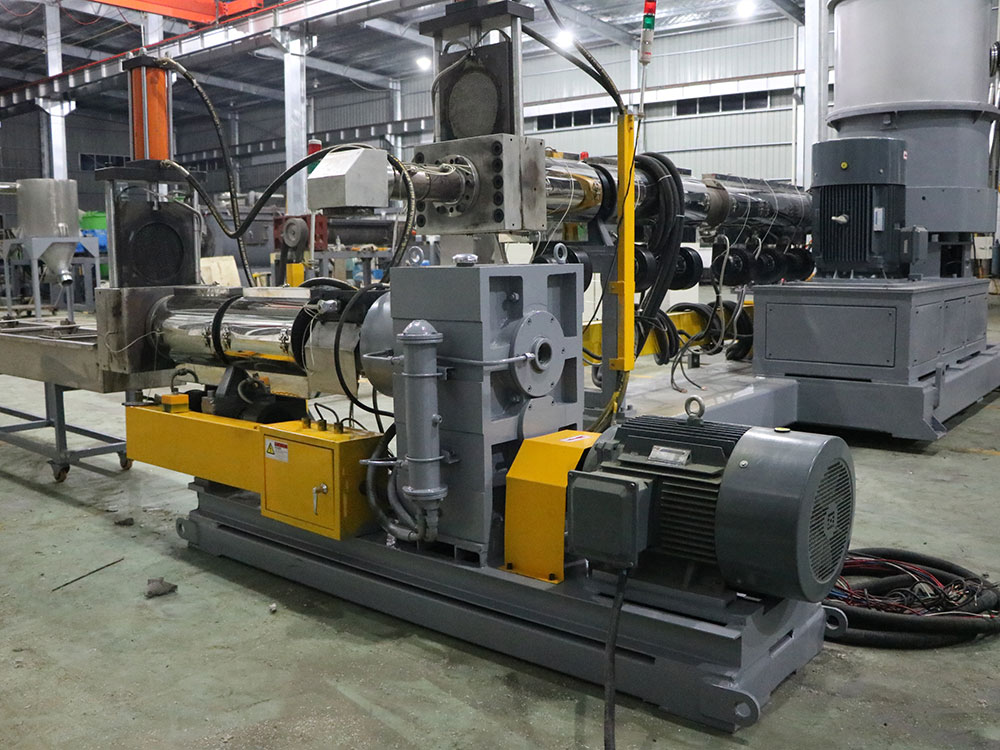
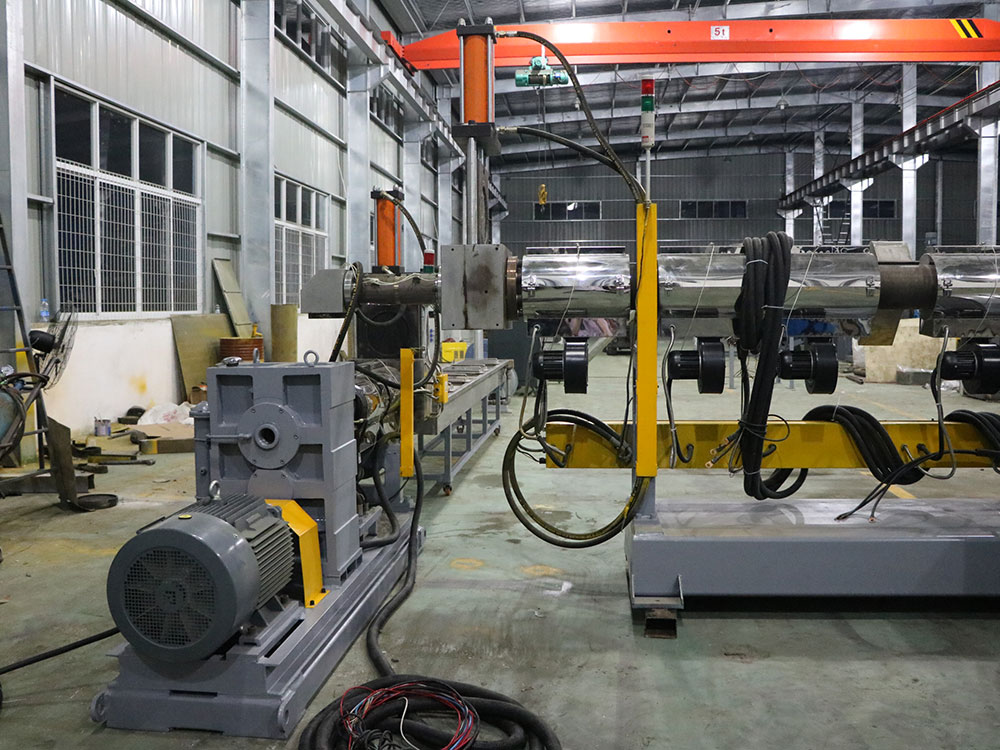
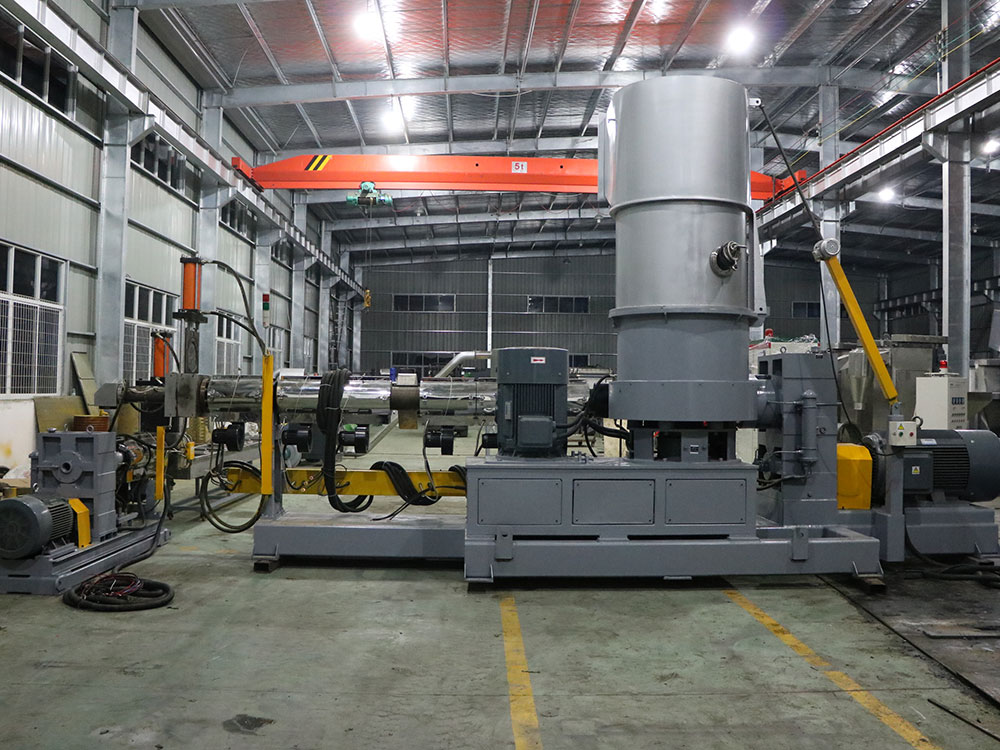
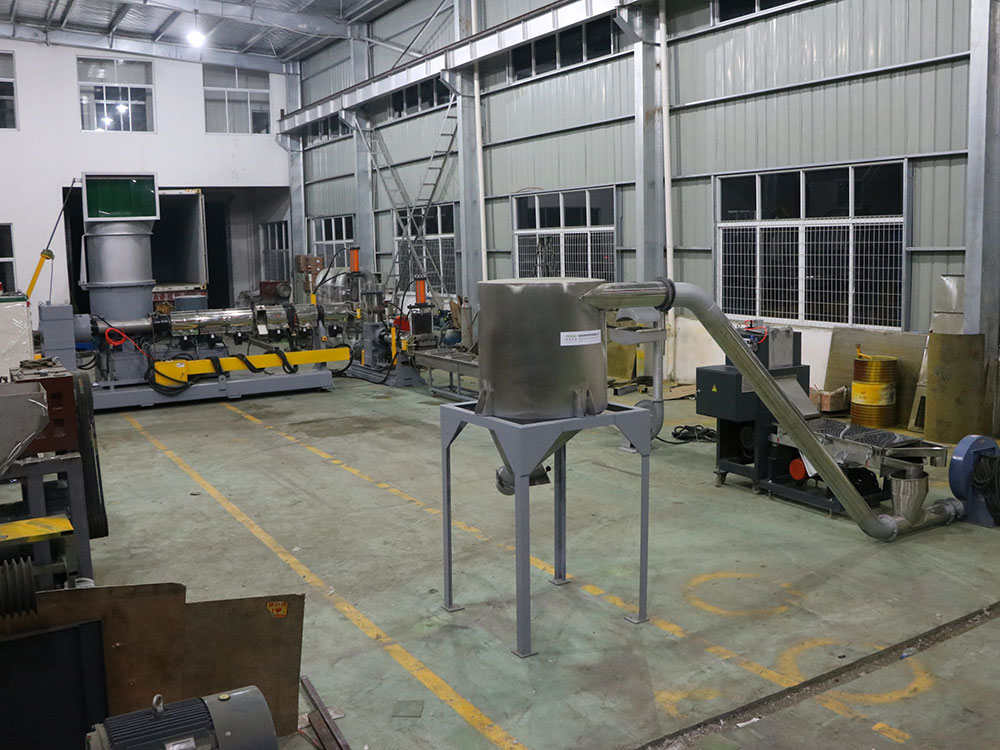


PS, EPS two-stage recycling pelletizing line
This production line is based on advanced European design and technology. It is mainly used for pelletizing relatively clean plastics such as PET, PE, HDPE flakes, PE/PP film, ABS, PA, EPS, and PS.
Plastic Extrusion Equipment
Plastic Recycling Equipment
Process Flow
Plastic materials are fed into the cutter-compactor via conveyor. High-speed rotation in the compactor densifies, dries, and preheats the material by frictional heating before forcing it into the extruder screw. The specially designed screw provides fast feeding, high wear resistance, natural venting, and vacuum degassing, effectively removing moisture from the material.
The extruder is equipped with durable cast-aluminum heaters. The compactor reduces screw heating load, accelerates plasticization, and saves energy while increasing throughput. A back-flushing hydraulic screen changer removes impurities, and different mesh filters can be used to produce various grades of pellets.moisture from the material.
The die head is specially designed to release hidden moisture, improving pellet quality. A two-stage pelletizing system can be configured for double filtration, producing cleaner and higher-quality pellets. A vibrating screen ensures uniform pellet size and attractive appearance.moisture from the material.
Pelletizing methods include strand pelletizing, die-face hot cutting (water-ring pelletizing), or underwater pelletizing, depending on material type and production requirements.
The extruder is equipped with durable cast-aluminum heaters. The compactor reduces screw heating load, accelerates plasticization, and saves energy while increasing throughput. A back-flushing hydraulic screen changer removes impurities, and different mesh filters can be used to produce various grades of pellets.moisture from the material.
The die head is specially designed to release hidden moisture, improving pellet quality. A two-stage pelletizing system can be configured for double filtration, producing cleaner and higher-quality pellets. A vibrating screen ensures uniform pellet size and attractive appearance.moisture from the material.
Pelletizing methods include strand pelletizing, die-face hot cutting (water-ring pelletizing), or underwater pelletizing, depending on material type and production requirements.
Features
- Low energy consumption, stable output, low noise, and high automation.
- Produces compact, smooth, and glossy plastic pellets.
- Flexible cutting options: water-ring hot cutting, strand pelletizing, or underwater pelletizing, depending on material.
Main Technical Parameters
| Model | L/D Ratio | Pelletizing Style | Applicable Materials | Capacity (kg/h) |
|---|---|---|---|---|
| 100/120 | 7–40:1 | Strand pelletizing or water ring hot cutting | PET, PE, HDPE flakes, PE film, PP film, ABS, PA, EPS, PS, etc. | 200–300 |
| 120/150 | 400–600 | |||
| 150/180 | 700–800 | |||
| 160/180 | 800–900 |
